
What Causes Uneven Cutting on a Golf Course Green?
Published:
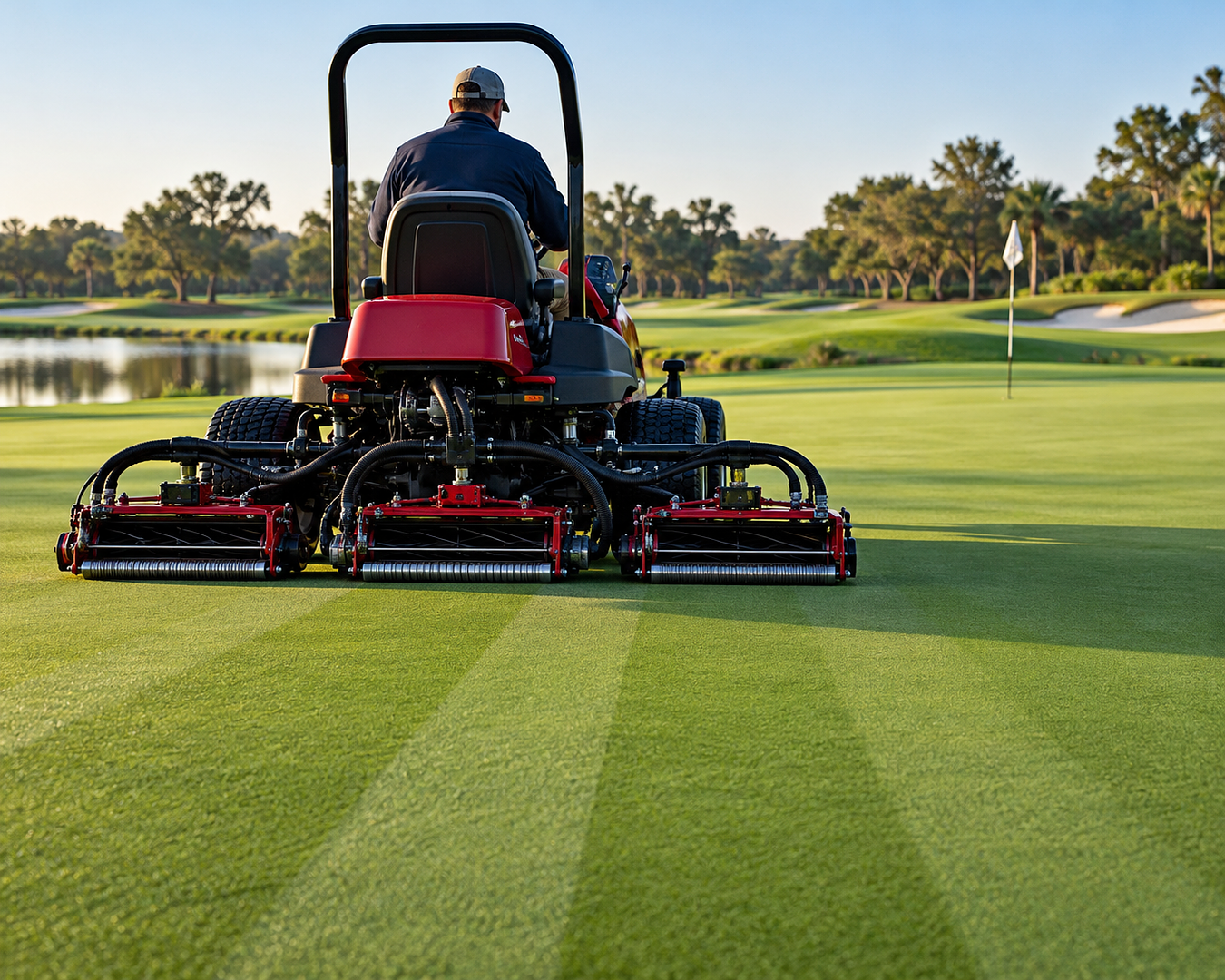
Smooth, consistent putting greens are essential to golfers for a high-quality playing experience. When a greens mower leaves uneven cutting patterns, missed grass, streaks, or scalping, it can affect both the appearance and playability of the green.
Uneven cutting can result from several factors, including improper mower setup, worn cutting components, uneven ground conditions, or operator technique. Identifying the cause early can help golf courses maintain healthier turf and achieve more consistent cutting results.
1. Worn or Improperly Adjusted Cutting Units
One of the most common causes of uneven cutting is the condition of the mower's reels and bedknives. Dull reel blades, worn bedknives, or incorrect reel-to-bedknife adjustment can prevent the mower from producing a clean, consistent cut.
Regular inspection, proper adjustment, and professional reel sharpening help maintain cutting quality. Even a well-maintained mower can produce inconsistent results if its cutting units are not set up correctly.
2. Incorrect Height-of-Cut Settings
If cutting units are not adjusted to the same height, the mower may leave visible lines or inconsistent turf lengths across the green.
Height-of-cut settings should be checked regularly, particularly after maintenance or cutting-unit adjustments. Small differences can have a noticeable effect on closely maintained putting surfaces.
3. Ground Conditions and Green Contours
Uneven surfaces, soft spots, excessive thatch, and changes in ground elevation can affect how cutting units follow the turf. This may cause scalping in low areas or missed grass in higher areas.
Proper cultural practices, including aeration, topdressing, and rolling when appropriate, help maintain smoother surfaces. Mowing speed and equipment setup should also be suited to the contours of each green.
4. Mower Condition and Maintenance
Mechanical wear can affect a greens mower's ability to maintain a consistent height of cut. Worn rollers, loose bearings, damaged components, or problems with suspension and cutting-unit movement may contribute to uneven results.
Routine maintenance is essential. Golf courses should inspect reels, bedknives, rollers, bearings, tires, and other relevant components according to the manufacturer's recommendations.
When evaluating a used greens mower, it is important to look beyond engine hours and overall appearance. The condition of the cutting units and the machine's maintenance history can make a significant difference in cutting performance.
5. Operator Technique and Mowing Conditions
Even properly maintained equipment can produce inconsistent results if mowing practices are not suitable for the conditions.
Excessive speed, sharp turns, inconsistent mowing patterns, or mowing when the turf is excessively wet can contribute to poor cutting quality. Training operators to follow consistent mowing practices helps reduce scalping, turf damage, and visible cutting inconsistencies.
6. Choosing the Right Greens Mower
The condition and design of the mower also matter. A properly maintained reel mower designed for putting greens provides the precision needed for a consistent, fine cut.
When purchasing used golf course equipment, consider the machine's overall condition, cutting-unit performance, service history, and availability of replacement parts. A well-maintained used greens mower can be a cost-effective option for golf courses looking to maintain quality while managing their equipment budgets.
Final Thoughts
Uneven cutting on a golf course green is often a sign that something needs attention, whether it is reel adjustment, mower maintenance, ground conditions, or mowing technique. Regular inspections and consistent maintenance practices can help golf courses achieve smoother, healthier, and more uniform putting surfaces.
At Statewide Turf Equipment, we have been selling used turf equipment for over 30 years. We help golf courses and turf professionals find equipment to meet their needs and budgets.