
5 Signs Your Golf Course Mower Needs Major Service
Published:
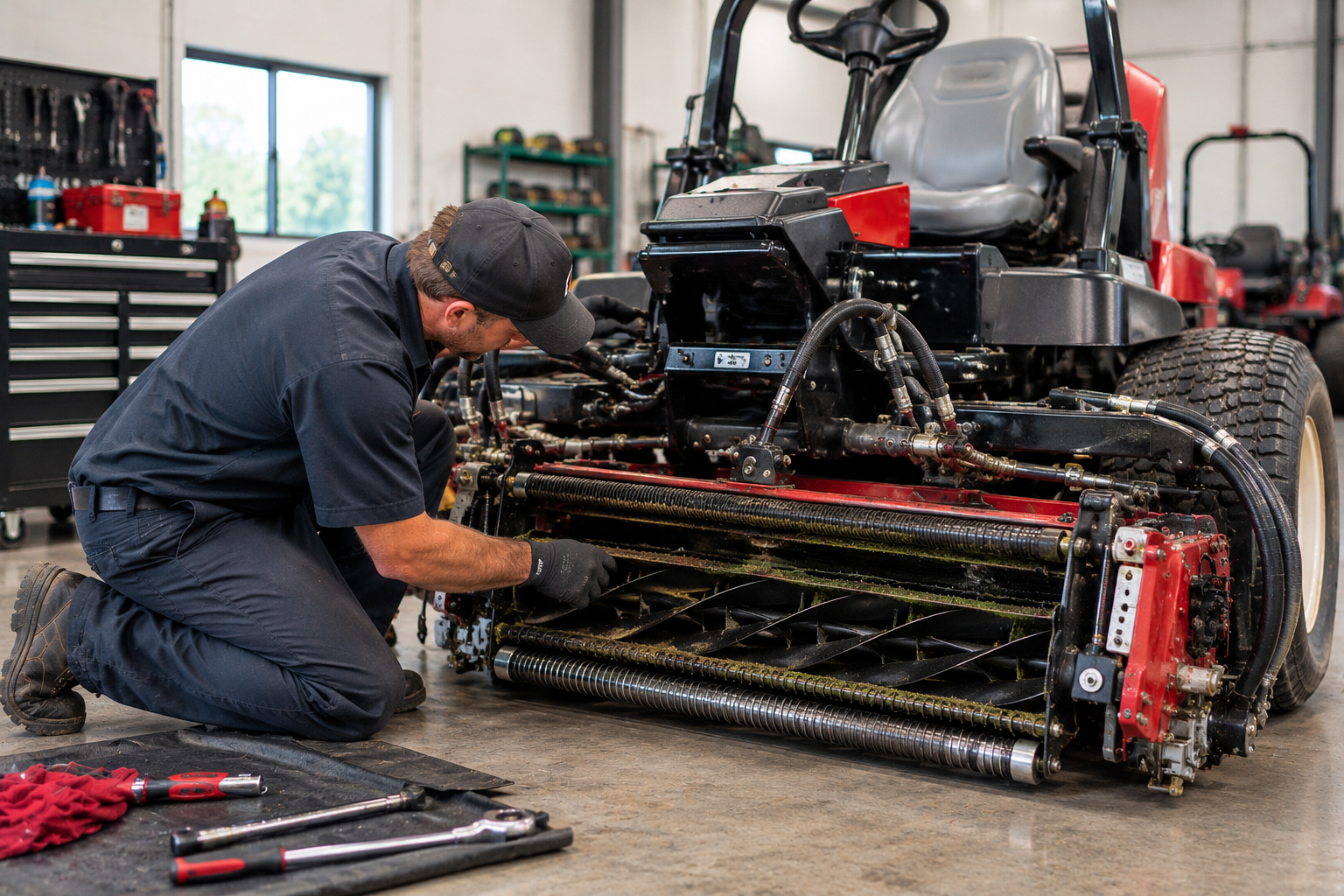
Golf course mowers are essential for maintaining consistent playing conditions and a professional appearance. However, even well-maintained equipment eventually develops mechanical problems. Recognizing the warning signs early can help prevent unexpected breakdowns, costly repairs, and interruptions to your maintenance schedule.
Here are five signs that your golf course mower may need major service.
1. Uneven Cutting Quality
If your mower is leaving streaks, scalping turf, or producing an inconsistent cut, it may be more than a simple adjustment issue. Worn reels, bedknives, cutting components, or problems with the mower's suspension and setup can affect cutting performance.
What to check: Inspect the reels and bedknives for wear, verify cutting adjustments, and check for damaged or misaligned components. If the problem continues after basic adjustments, a more thorough inspection may be necessary.
2. Unusual Noises or Excessive Vibration
Grinding, knocking, squealing, or unusual vibration can indicate worn bearings, damaged cutting units, loose components, or problems with the engine or drivetrain.
What to check: Stop the machine and investigate any unusual sounds or vibration before continuing operation. Ignoring these warning signs can allow a relatively small problem to develop into a more expensive repair.
3. Hydraulic Leaks or Loss of Power
Hydraulic systems are critical to the operation of many golf course mowers. Leaking fluid, slow lifting, weak traction, or inconsistent operation may indicate worn hoses, failing seals, pump problems, or other hydraulic system issues.
What to check: Inspect hoses, fittings, cylinders, and fluid levels. If the mower continues to lose power or operate inconsistently, have the hydraulic system professionally diagnosed.
4. Engine Problems or Frequent Overheating
Difficulty starting, excessive smoke, loss of engine power, unusual engine noises, or repeated overheating can signal developing mechanical problems. Depending on the cause, repairs may involve the cooling system, fuel system, injectors, or internal engine components.
What to check: Review maintenance records, inspect cooling system components, and check for warning lights or fluid loss. Repeated overheating should be addressed promptly to help prevent serious engine damage.
5. Increasing Repair Costs and Frequent Breakdowns
One of the clearest signs that a mower needs major service is a pattern of recurring repairs. If the machine frequently requires attention, spends more time in the shop, or struggles to complete its normal workload, it may be approaching a major maintenance milestone.
What to check: Review repair invoices, maintenance history, operating hours, and parts costs. Compare the cost of the necessary repairs with the machine's overall condition and expected remaining service life.
Should You Repair or Replace Your Mower?
Major service does not automatically mean a mower needs to be replaced. A machine with a sound engine, solid frame, and good overall condition may be worth repairing. However, when multiple systems are failing or repair costs continue to rise, it may be time to compare the cost of repairs with the price of another machine.
For golf courses working within a budget, a quality used mower can be a practical alternative to purchasing new equipment. The key is to evaluate the machine's condition, maintenance history, parts availability, and expected performance before making a decision.
Final Thoughts
Recognizing these five warning signs can help golf course maintenance teams plan repairs, reduce unexpected downtime, and make more informed equipment decisions. Regular inspections and preventive maintenance remain some of the best ways to extend the life of your mower.
At Statewide Turf Equipment, we have been selling used turf equipment for over 30 years. We help golf courses and turf professionals find equipment to meet their maintenance needs and budgets.