
Why Is Aeration Important for Golf Course Greens?
Published:
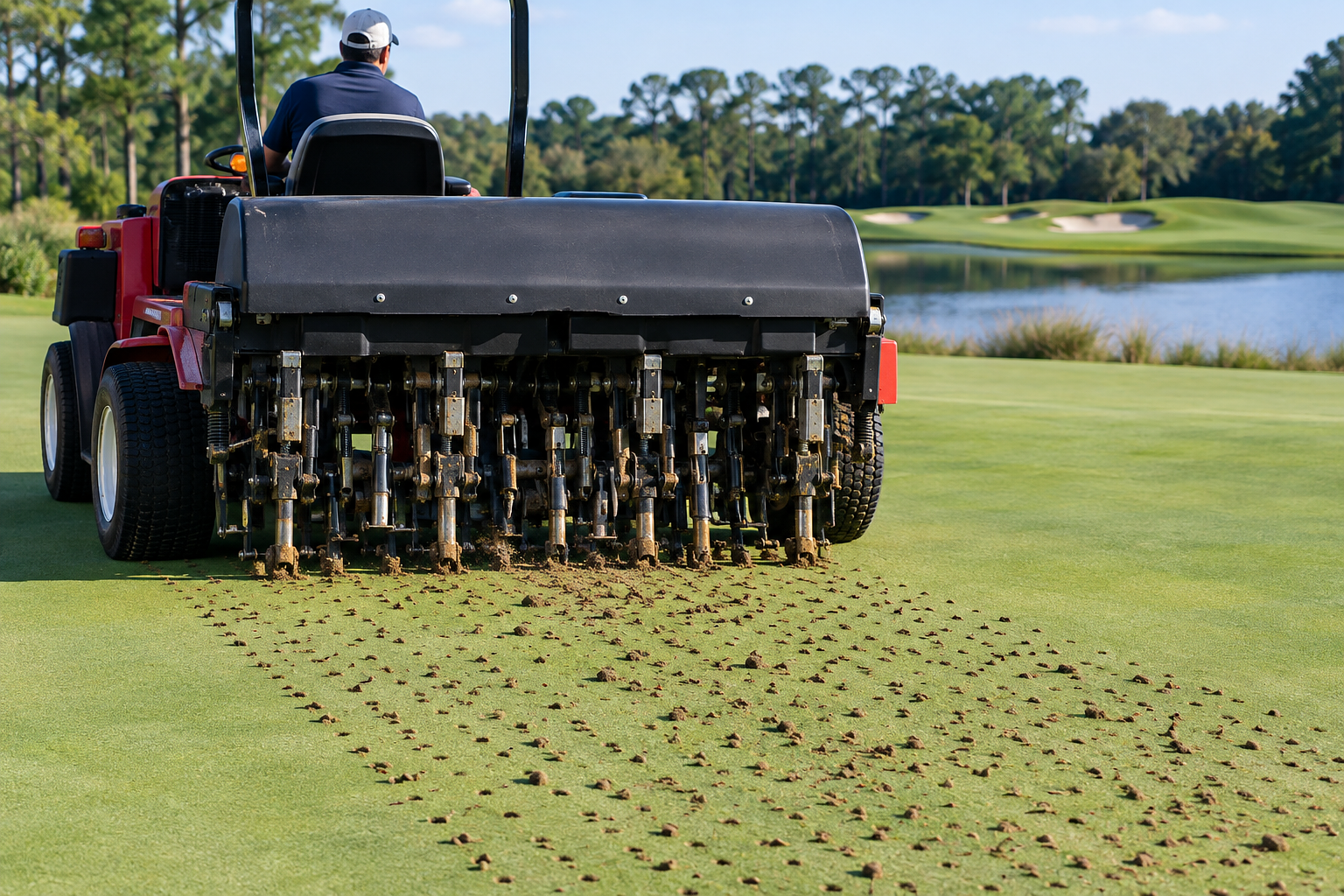
Golf course putting greens require consistent care to maintain healthy turf, smooth surfaces, and reliable playing conditions. While regular mowing, irrigation, and fertilization are essential, aeration is another important part of a successful turf maintenance program.
Aeration helps relieve soil compaction, improve water movement, and encourage healthy root growth. Although the process temporarily disrupts the putting surface, the long-term benefits can make a significant difference in the health and performance of the greens.
What Is Golf Course Aeration?
Aeration, also called aerification, is the process of creating holes in the soil to improve conditions within the turf's root zone.
Many golf courses use core aerators, which remove small plugs of soil and organic material from the green. Other methods use solid tines or specialized equipment to create openings in the soil with less surface disruption.
These openings help improve air exchange, water infiltration, and root development while supporting the overall health of the turf.
5 Reasons Aeration Is Important for Golf Greens
1. Reduces Soil Compaction
Golf greens experience constant traffic from golfers, mowers, and maintenance equipment. Over time, this traffic can compact the soil, reducing the space available for air and water to move through the root zone.
Aeration helps relieve compaction, allowing roots to grow more effectively and helping the turf remain healthy under regular use.
2. Improves Water and Air Movement
Compacted soil can prevent water from moving efficiently into the ground. This may lead to water runoff, poor drainage, and inconsistent moisture levels across the green.
Aeration creates openings that help water enter the soil and improve gas exchange around the roots. This supports healthier turf and can help reduce certain moisture-related problems.
3. Encourages Stronger Root Growth
Healthy roots are essential for maintaining dense, resilient putting greens. When roots have access to suitable soil conditions, they can better absorb the water and nutrients needed for growth.
Aeration helps create a more favorable root-zone environment, supporting turf that can better withstand heat, traffic, and other environmental stresses.
4. Helps Manage Organic Matter and Thatch
Organic material naturally accumulates near the soil surface as grass grows and plant material breaks down. When excessive organic matter builds up, it can hold too much moisture and contribute to soft, inconsistent putting surfaces.
Core aeration removes some of this material and helps superintendents manage the organic matter layer. Sand topdressing is often used after aeration to help fill the holes and support a firmer, smoother surface.
5. Supports Better Putting Conditions
Healthy turf is the foundation of consistent golf greens. By managing compaction, moisture movement, and organic matter, aeration helps create conditions that support uniform turf growth and dependable playing surfaces.
Although golfers may notice temporary disruption immediately after aeration, the practice is an important part of maintaining greens over the long term.
When Should Golf Course Greens Be Aerated?
The best time to aerate depends on the grass variety, climate, soil conditions, and growing season. Superintendents generally schedule aeration when the turf can recover actively and efficiently.
Many courses perform aeration during planned maintenance windows to minimize disruption to golfers. The frequency and method depend on the needs of each green, including traffic levels, soil conditions, drainage, and organic matter accumulation.
So essentially there is no single aeration schedule that works for every golf course. A well-planned program should address the specific conditions of the turf.
What Equipment Is Used for Golf Course Aeration?
Specialized turf equipment makes it possible to aerate greens efficiently while controlling the depth, spacing, and amount of soil removed.
Common equipment includes:
- Core aerators: Remove plugs of soil to relieve compaction and help manage organic matter.
- Deep-tine aerators: Reach deeper into the soil profile to address certain subsurface compaction and root-zone concerns.
- Solid-tine aerators: Create openings with less surface disruption, although they do not remove soil cores.
- Topdressers: Apply sand or other approved topdressing materials after aeration to help fill holes and improve surface consistency.
Choosing the right equipment depends on the course's soil profile, turf conditions, maintenance goals, and desired recovery time.
Why Proper Aeration Equipment Matters
Golf course aeration requires reliable equipment that can perform consistently across delicate putting surfaces. Equipment condition, tine selection, hole spacing, and working depth all affect the results.
Regular inspection and maintenance help keep aerators operating properly during important maintenance windows. For golf courses managing older equipment, a well-maintained used aerator may also be a practical option for expanding maintenance capabilities while controlling equipment costs.
Final Thoughts
Aeration is more than a routine maintenance task. It is an essential practice for managing soil compaction, improving water movement, supporting root growth, and maintaining healthy golf course greens.
With the right equipment and a program tailored to the course's conditions, superintendents can protect the long-term health of their putting surfaces and provide more consistent playing conditions for golfers.
At Statewide Turf Equipment, we have been selling used turf equipment for over 30 years. We help golf courses and turf professionals find equipment to support their maintenance needs and keep their operations running efficiently.