
How Often Should Golf Course Greens Be Aerated?
Published:
Maintaining healthy golf course greens requires regular aeration. Aeration helps relieve soil compaction, improve drainage, and allow air, water, and nutrients to reach the roots. But one of the most common questions golf course superintendents ask is: How often should golf course greens be aerated?
The answer depends on several factors, including soil conditions, grass type, climate, and the amount of play the course receives.
How Many Times a Year Should Greens Be Aerated?
Most golf courses perform major core aeration one to three times per year, depending on turf conditions and maintenance needs.
- Once a year: May be sufficient for greens with good drainage, healthy soil, and lower traffic.
- Twice a year: A common schedule for courses that experience regular play and moderate soil compaction.
- Three or more times a year: May be necessary for heavily used greens or those experiencing significant compaction or drainage problems.
Many courses also use smaller solid tines or other less disruptive aeration methods throughout the year to maintain healthy turf without significantly affecting putting conditions.
When Is the Best Time to Aerate Golf Greens?
The best time to aerate depends on the type of grass growing on the course.
Warm-season grasses, such as Bermudagrass: Aeration is generally best performed during late spring and summer when the grass is actively growing and can recover quickly.
Cool-season grasses, such as bentgrass: Aeration is commonly performed in spring or early fall when temperatures are moderate and growing conditions support recovery.
Scheduling aeration during active growth helps greens heal faster and reduces disruption to golfers.
What Are the Signs Your Greens Need Aeration?
Even with a regular maintenance schedule, certain conditions may indicate that additional aeration is necessary.
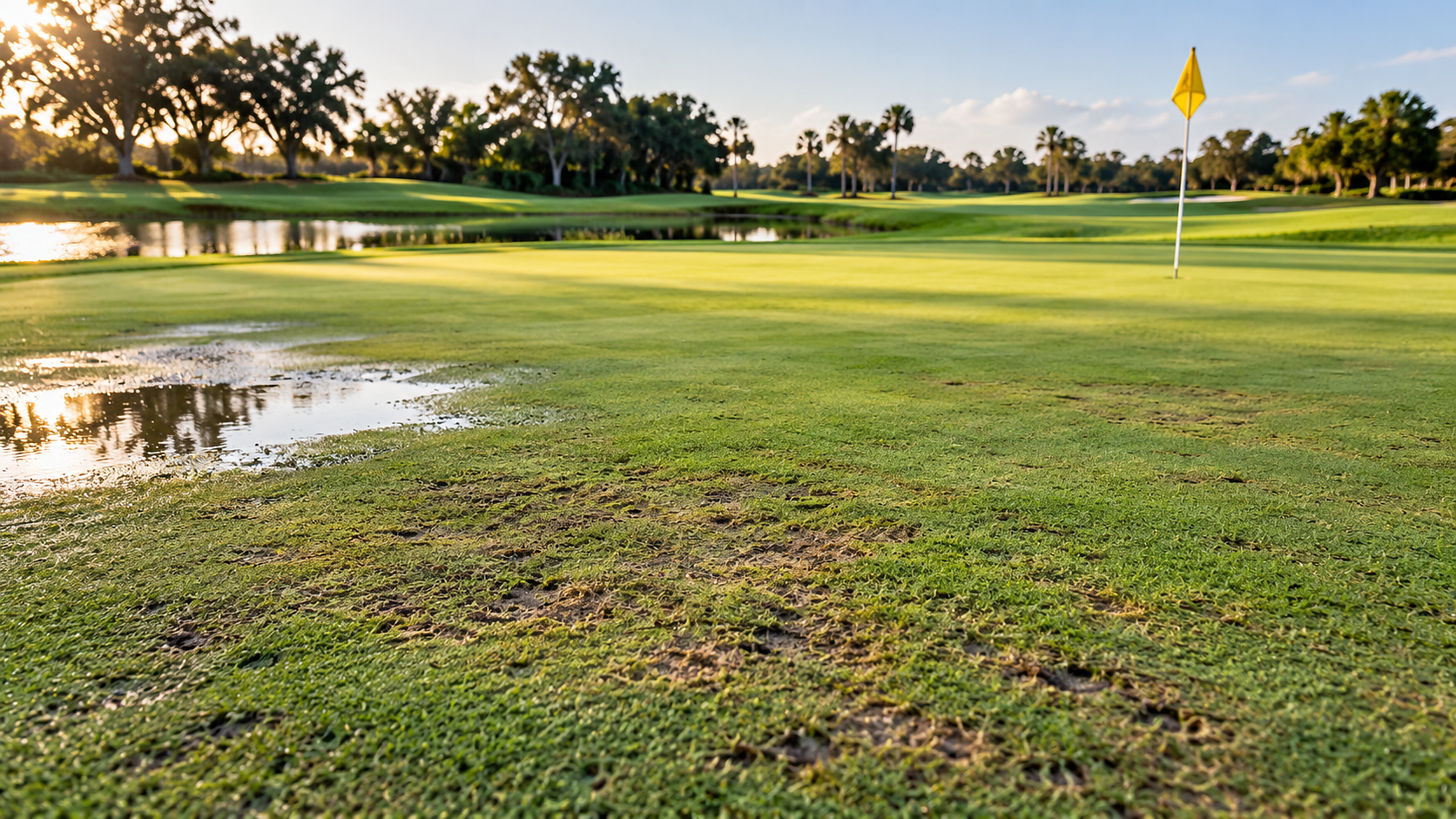
- Water pooling on the surface after rain or irrigation.
- Hard, compacted soil that limits root growth.
- Thin or weak turf in high-traffic areas.
- Poor drainage or slow water absorption.
- Excessive thatch or organic matter buildup.
Monitoring these conditions helps superintendents determine when aeration is needed rather than relying on a fixed schedule alone.
What Equipment Is Used to Aerate Golf Course Greens?
Golf courses commonly use walk-behind or tractor-mounted aerators, depending on the size of the area and the type of aeration required.
One popular option is the Toro ProCore 648, a walk-behind aerator designed for golf greens, tees, and other turf areas.
Core aerators remove small plugs of soil to help relieve compaction and manage organic matter. Solid-tine aerators create openings without removing soil, making them useful for less disruptive maintenance.
Choosing the right equipment can help maintenance crews complete aeration efficiently while minimizing downtime.
How Long Does It Take Greens to Recover After Aeration?
Recovery time depends on the aeration method, tine size, weather, and turf growth.
Major core aeration may require approximately two to four weeks for putting surfaces to recover, while smaller-tine aeration may cause much less disruption.
Proper watering, fertilization, topdressing, and favorable growing conditions can help speed up recovery.
Final Thoughts
Regular aeration is an important part of maintaining healthy, high-quality golf course greens. While many courses aerate once or twice annually, the ideal schedule depends on soil conditions, grass type, traffic, and overall turf health.
At Statewide Turf Equipment, we have been selling quality used golf course and turf maintenance equipment for over 30 years. Whether you're looking for a used Toro ProCore aerator or other golf course maintenance equipment, we can help you find the right machine for your needs.
Contact Statewide Turf Equipment
Website: www.statewideturfequipment.com
Email: info@statewideturf.com
Phone: 941-915-8783
Editorial note: The one-to-three-times-per-year range is a general starting point, not a fixed rule. Some heavily trafficked greens need more frequent core aeration, while others need less. The USGA recommends basing frequency on organic matter, turf conditions, and maintenance goals.