
Core Aeration vs. Solid Tine Aerification: What's the Difference?
Published:
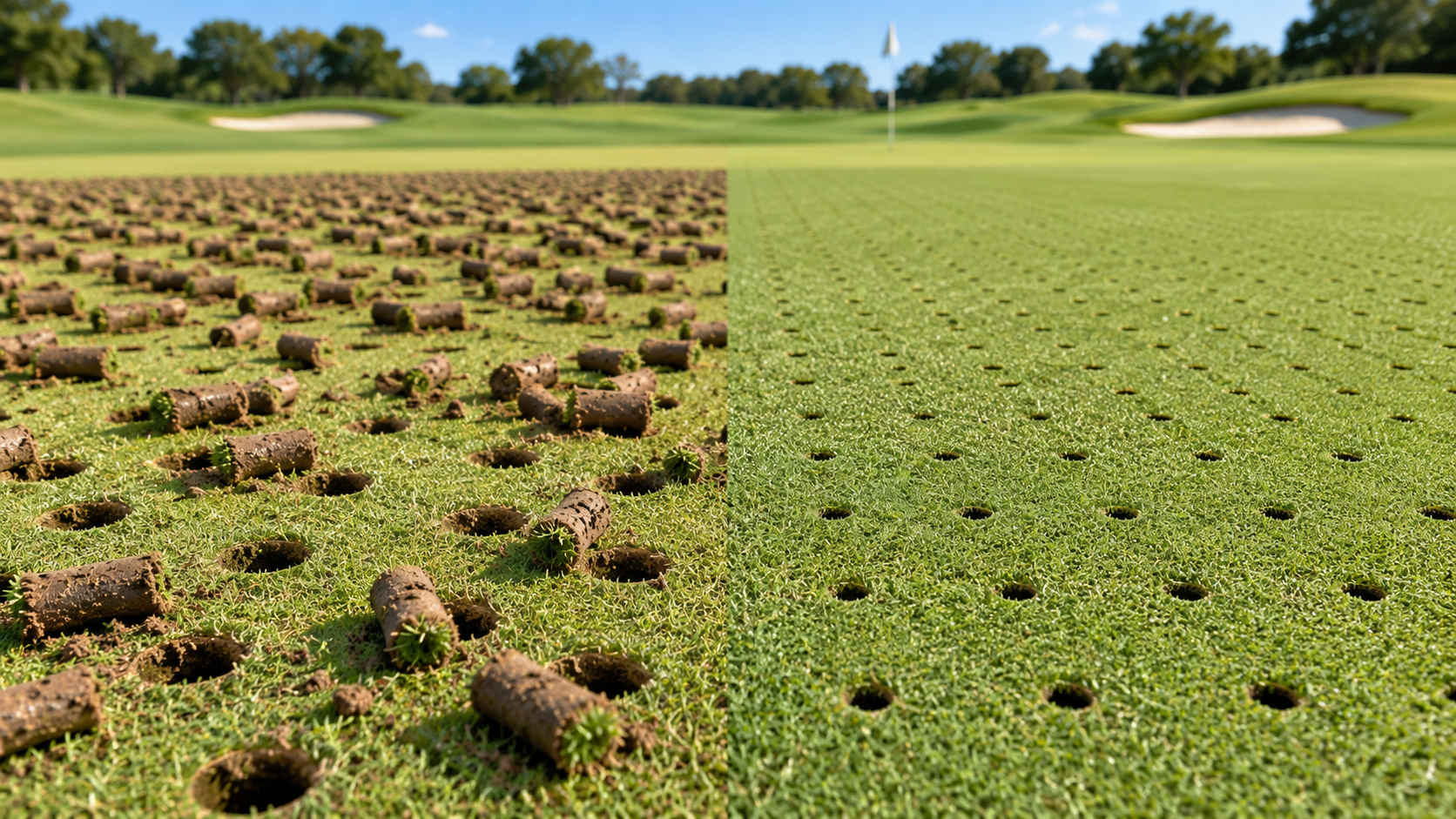
Maintaining a healthy golf course turf requires proper aeration, but not all aeration methods work the same way. Two of the most common techniques used on golf courses are core aeration and solid tine aerification.
Both methods help improve turf health, but understanding their differences can help golf course superintendents choose the right approach for their greens, tees, and fairways.
What Is Core Aeration?
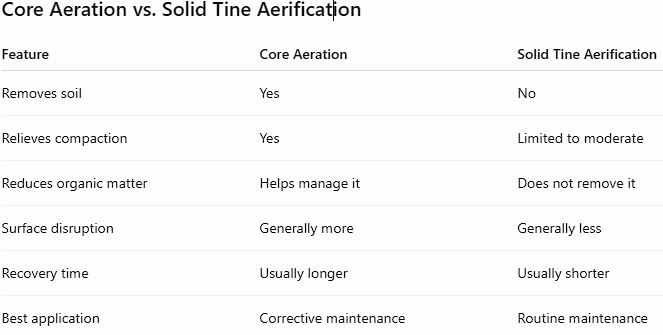
Core aeration, also called hollow tine aeration, uses hollow metal tines to remove small plugs of soil and thatch from the turf.
Removing these cores creates openings that allow air, water, and nutrients to reach the root system while helping relieve soil compaction.
Benefits of Core Aeration:
- Removes soil to help reduce compaction.
- Helps manage excessive organic matter and thatch.
- Improves water infiltration and air exchange.
- Encourages stronger, healthier root growth.
- Creates opportunities to incorporate sand topdressing into the soil profile.
Best For: Golf course greens, tees, and fairways that need compaction relief or organic matter management.
What Is Solid Tine Aerification?
Solid tine aerification uses solid metal tines to create holes in the turf without removing soil cores.
Instead of extracting soil, the tines penetrate the surface and displace soil around the holes. This helps improve air and water movement while generally causing less surface disruption than traditional core aeration.
Benefits of Solid Tine Aerification:
- Improves air and water movement into the soil.
- Can provide temporary relief from surface compaction.
- Typically creates less cleanup than core aeration.
- Often allows quicker recovery and a faster return to normal playing conditions.
- Can be performed more frequently as part of a regular turf maintenance program.
Best For: Golf courses looking to maintain healthy turf with minimal disruption to play.
Which Aeration Method Is Better for Golf Courses?
The best method depends on the condition of the turf and the golf course's maintenance goals.
Core aeration is often the better choice when soil compaction, excessive organic matter, or poor drainage are significant concerns. Removing soil cores allows superintendents to address these problems more directly.
Solid tine aerification is useful when the goal is to improve air and water movement while minimizing disruption to golfers. It can be especially beneficial during busy playing seasons.
Many golf courses use a combination of both methods throughout the year to maintain healthy playing surfaces.
Choosing the Right Aeration Equipment
Selecting the right aerator is just as important as choosing the aeration method. Equipment such as the Toro ProCore series offers different tine configurations and aeration options to suit various turf conditions.
For golf courses working within a budget, purchasing quality used aeration equipment can provide reliable performance without the expense of buying new.
Final Thoughts
Both core aeration and solid tine aerification play important roles in golf course maintenance. Core aeration helps address deeper turf management concerns, while solid tine aerification provides a less disruptive way to maintain soil aeration.
Understanding when to use each method can help golf course superintendents maintain healthier turf and better playing conditions throughout the year.
Looking for Used Golf Course Aeration Equipment?
At Statewide Turf Equipment, we have over 30 years of experience selling quality used golf course and turf maintenance equipment. We offer used aerators, mowers, and other turf equipment to help golf courses maintain their grounds while staying within budget.
Website: www.statewideturfequipment.com
Email: info@statewideturf.com