
What Depth Should You Aerate Golf Course Greens?
Published:
Aeration is an essential part of maintaining healthy golf course greens. It helps relieve soil compaction, improve drainage, and encourage stronger root growth. However, one question golf course superintendents frequently ask is: How deep should golf course greens be aerated?
The ideal aeration depth depends on soil conditions, turfgrass type, root development, and the overall condition of the greens.
What Is the Recommended Aeration Depth?
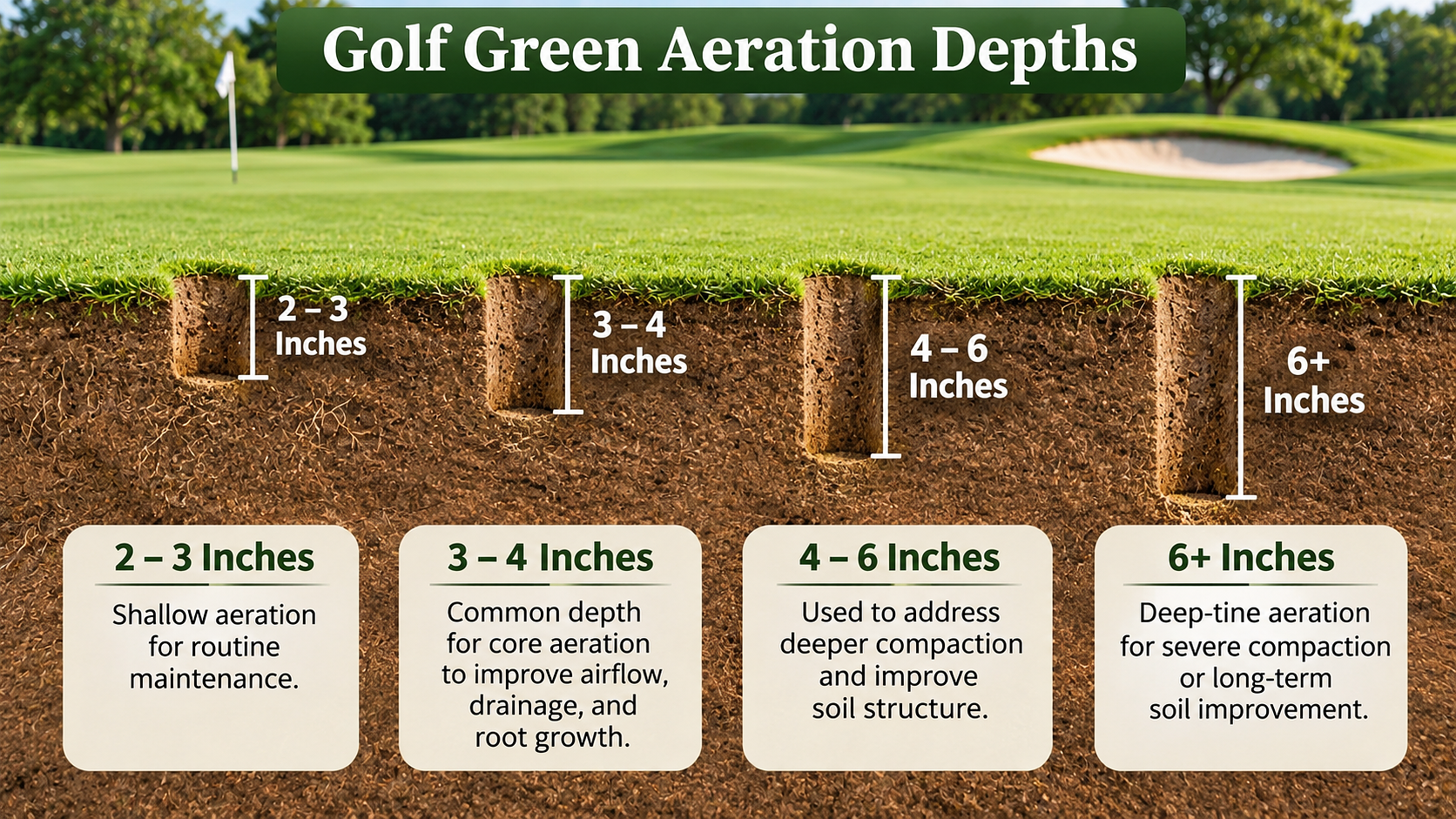
Most golf course greens are aerated at depths between 2 and 4 inches for routine maintenance. However, deeper aeration may be necessary to address compaction or drainage problems.
- 2–3 inches: Common for shallow aeration and routine surface maintenance.
- 3–4 inches: Often used for traditional core aeration to improve airflow, water movement, and root development.
- 4–6 inches: May be beneficial when deeper compaction needs to be addressed.
- 6 inches or deeper: Specialized deep-tine aeration equipment can help break up compacted soil below the normal aeration zone.
These are general guidelines. The correct depth should be based on the condition of the greens and the goals of the aeration program.
Why Does Aeration Depth Matter?
Aerating at the correct depth helps maintain healthy turf and consistent playing conditions.
Improved Root Growth
Aeration creates openings in compacted soil, allowing roots to access oxygen, water, and nutrients more easily.
Better Drainage
Proper aeration helps water move through the soil profile, reducing surface water accumulation and improving growing conditions.
Reduced Soil Compaction
Golf greens experience constant traffic from golfers and maintenance equipment. Aeration helps relieve compaction that can restrict root development.
Healthier Turf
When roots have access to air, moisture, and nutrients, turfgrass is better equipped to tolerate heat, drought, and everyday wear.
Should You Aerate Deeper Every Time?
Not necessarily. Deeper aeration is not always better.
Shallow aeration can be effective for routine maintenance, while deeper aeration may be needed to address specific soil problems.
Golf course superintendents should consider soil testing, root depth, seasonal growing conditions, and the amount of disruption the greens can tolerate before selecting an aeration depth.
Using different aeration depths throughout the year can also help prevent repeated treatment of the same soil layer.
Choosing the Right Aeration Equipment
The type of aerator used can make a significant difference in achieving the desired results.
Equipment such as the Toro ProCore 648 is commonly used on golf course greens because it offers adjustable aeration depth, tine options, and consistent hole spacing.
Selecting the correct equipment helps maintenance crews aerate efficiently while minimizing unnecessary turf disruption.
Final Thoughts
There is no single aeration depth that works for every golf course. While 2 to 4 inches is common for routine greens aeration, deeper treatments may be necessary depending on soil conditions and compaction levels.
The key is choosing the right depth, equipment, and timing to encourage healthy root development and maintain excellent playing conditions.
Looking for Quality Used Golf Course Aeration Equipment?
At Statewide Turf Equipment, we have been selling quality used golf course and turf maintenance equipment for over 30 years. We offer equipment from trusted manufacturers, including Toro and John Deere, to help golf courses maintain healthy turf while managing equipment costs.
Visit: www.statewideturfequipment.com
Email: info@statewideturf.com